

Daler-Rowney
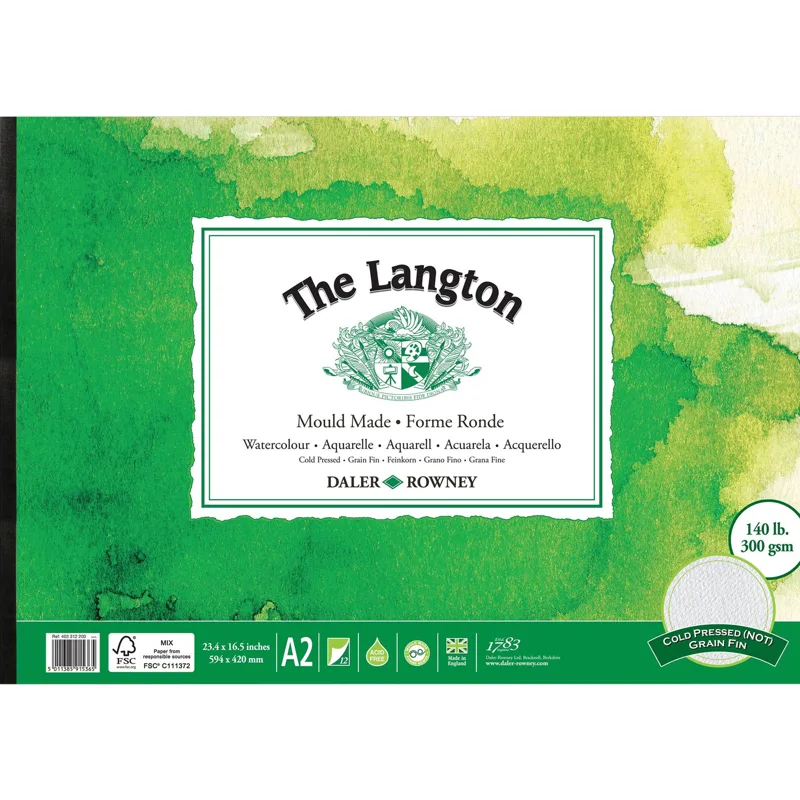
Daler-Rowney Langton watercolour pad
A heavyweight watercolour paper pad that copes with washes better than thin sketchbook paper.
View at ARTdiscountBlog, 22 November 2026
Watercolour has a reputation for being difficult. Some of that is technique, but a surprising amount comes down to cheap paper that cockles and pills the moment it gets wet.
← All articles · This article contains affiliate links, marked as sponsored. If you buy through them we may earn a commission at no extra cost to you.
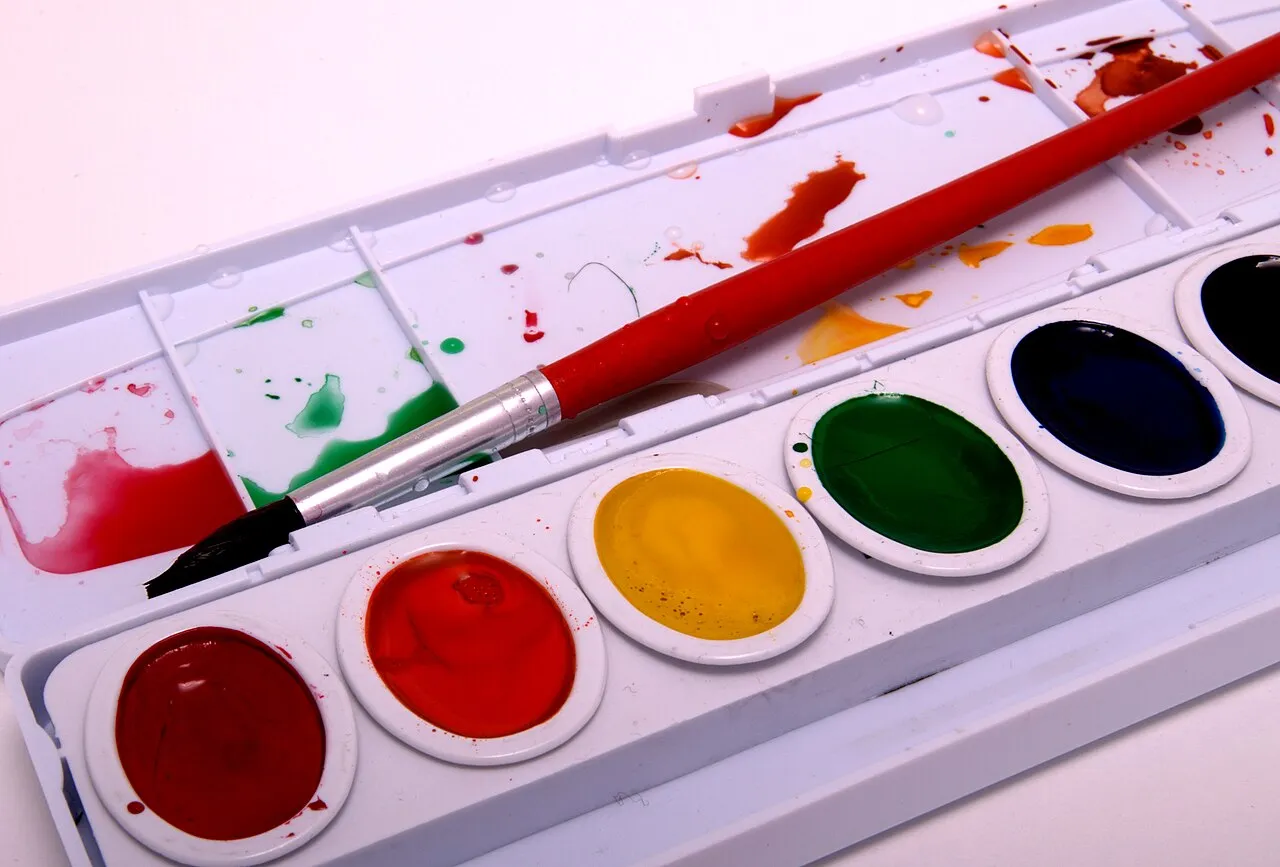
You don't need much to start painting in watercolour: paper, a small set of paints, two or three brushes and a jar of water. The trick is spending your money in the right place, and for watercolour that place is the paper.
Watercolour paper is made to take a lot of water without buckling badly or breaking up when you lift colour. Ordinary sketchbook or printer paper simply can't do that, and beginners often blame themselves for problems the paper is causing.
Look for:
The Daler-Rowney Langton watercolour pad from ARTdiscount is a long-established British student paper that behaves far better than general-purpose pads. Buy one good pad rather than several cheap ones. For planning a painting or sketching outdoors, a Winsor & Newton wiro sketchbook lies flat and travels well.
Paints come in two broad grades. Artist quality has more pigment and a wider range of single-pigment colours, and it costs more. Student quality uses less pigment and sometimes "hue" versions of expensive colours, but it's perfectly good for learning.
Winsor & Newton's Cotman range is the student line many UK art teachers recommend. You can buy it in boxed sets or as individual Cotman half pans, which is a smart way to build your own palette. A limited set of six to eight colours teaches you far more about mixing than a box of forty.
A good starter palette might include a warm and cool version of each primary: for example a lemon yellow and a deeper yellow, a crimson-type red and a warmer red, an ultramarine and a cerulean or phthalo blue, plus a burnt sienna. From those you can mix greens, greys and most of the colours you see in the British landscape.
Synthetic brushes have improved enormously and are what most beginners should buy. You need fewer than you think:
The Cotman 7 brush set covers those shapes in one go. Rinse brushes after each session, reshape the tip, and dry them flat or tip up, never resting on the bristles.
Resist the urge to start with a detailed scene. Spend your first sessions on exercises that teach you how water and pigment behave:
Our painting and drawing supplies guide covers acrylics, gouache and sketchbooks too. If you'd like feedback on your first paintings, the UK community at CraftingUK is a friendly place to share them. Painting from the US or Canada? CraftShop Direct covers art supplies for North American makers.
Checked daily for stock; anything currently unavailable is hidden. We haven't tested every item, so read the retailer's listing before buying.
Daler-Rowney
A heavyweight watercolour paper pad that copes with washes better than thin sketchbook paper.
View at ARTdiscount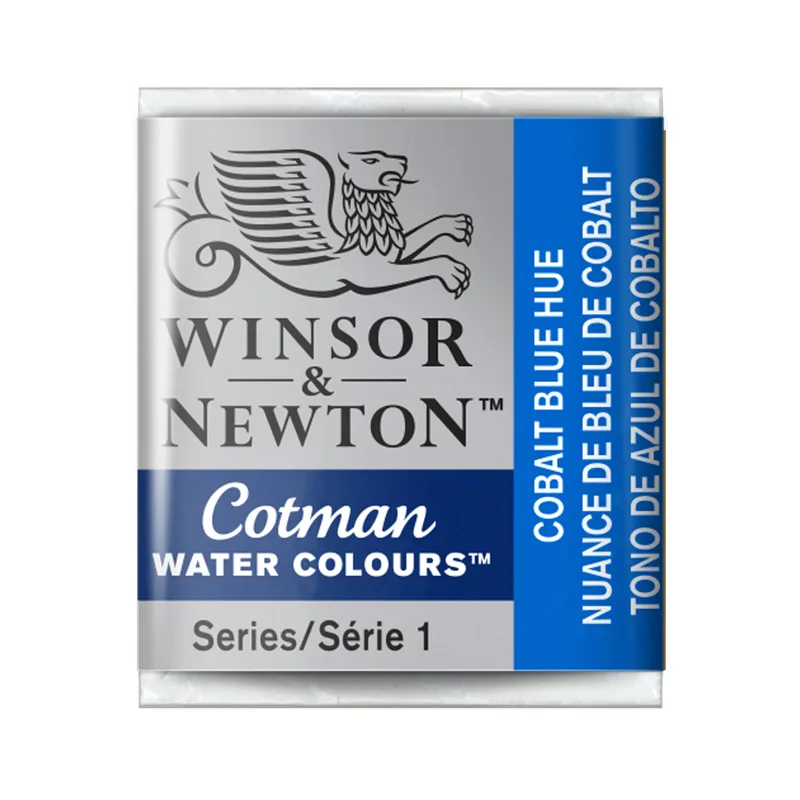
Winsor & Newton
Single student-grade half pans for filling or refilling a travel palette colour by colour.
View at ARTdiscount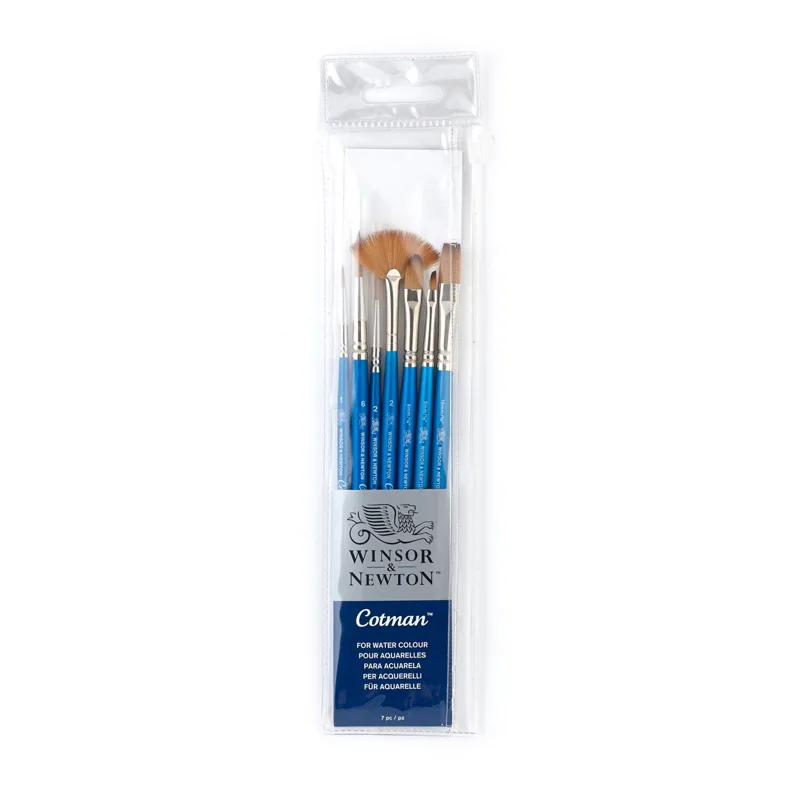
Winsor & Newton
A starter set of synthetic watercolour brushes in useful round and flat sizes.
View at ARTdiscountWinsor & Newton
Paint it on to keep areas of watercolour paper white, then rub it off once the washes are dry.
View at Amazon UK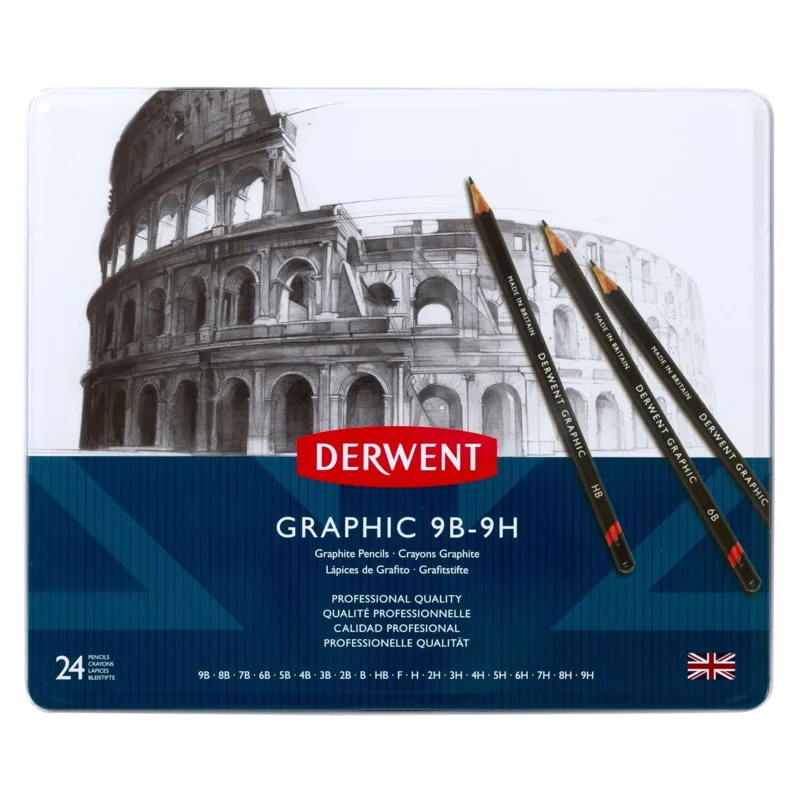
Derwent
A full graphite range from hard to soft grades, so you can shade from pale lines to deep darks.
View at ARTdiscount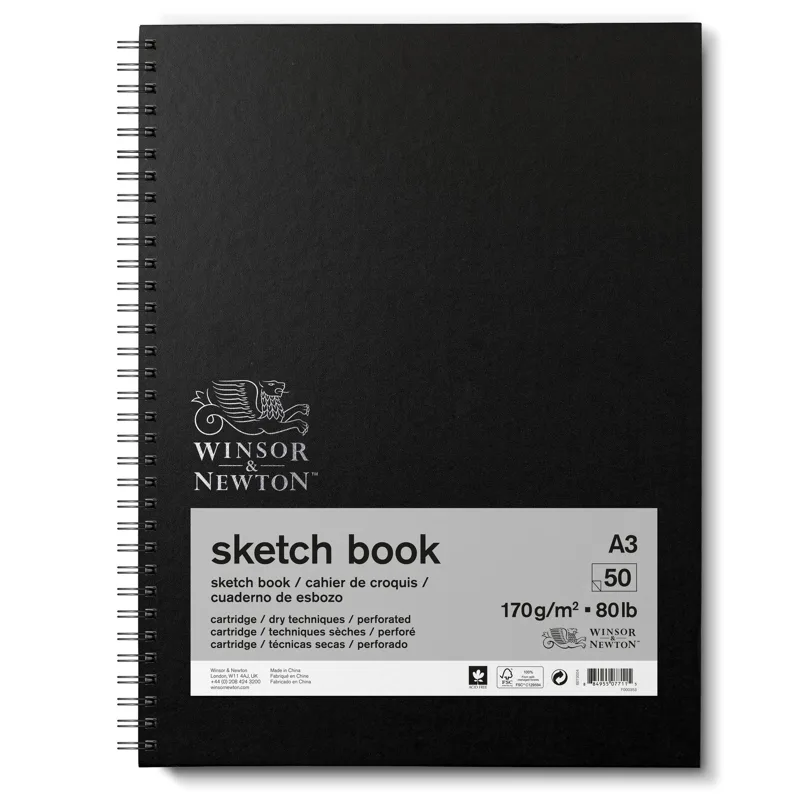
Winsor & Newton (ARTdiscount)
A spiral-bound hardback sketchbook that lies flat open, handy for sketching outdoors or planning a painting.
View at ARTdiscount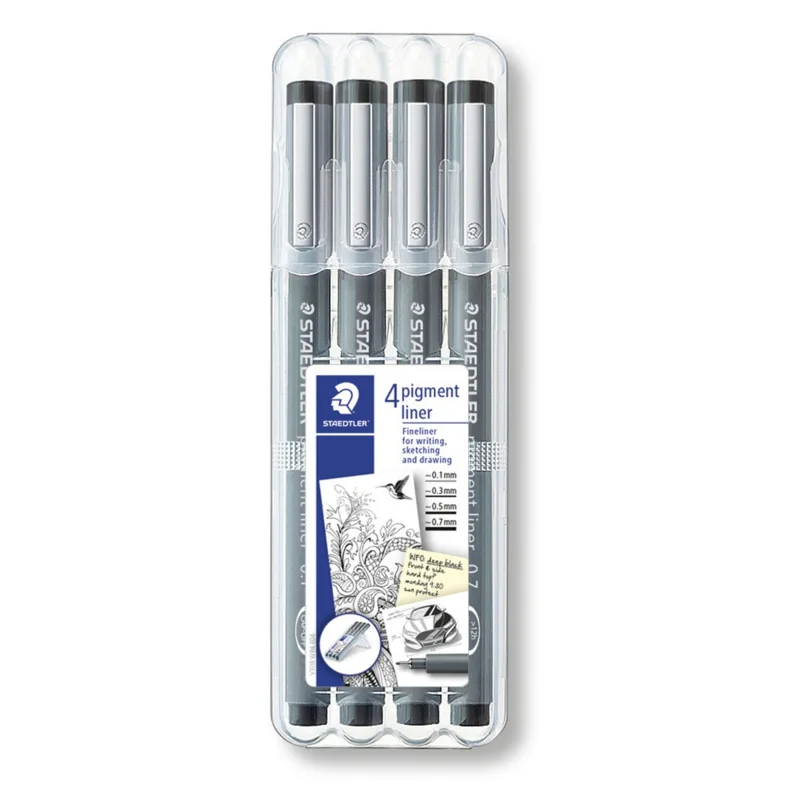
Staedtler
Fineliners in four nib widths with pigment ink, so lines stay put when you add watercolour washes on top.
View at ARTdiscount